
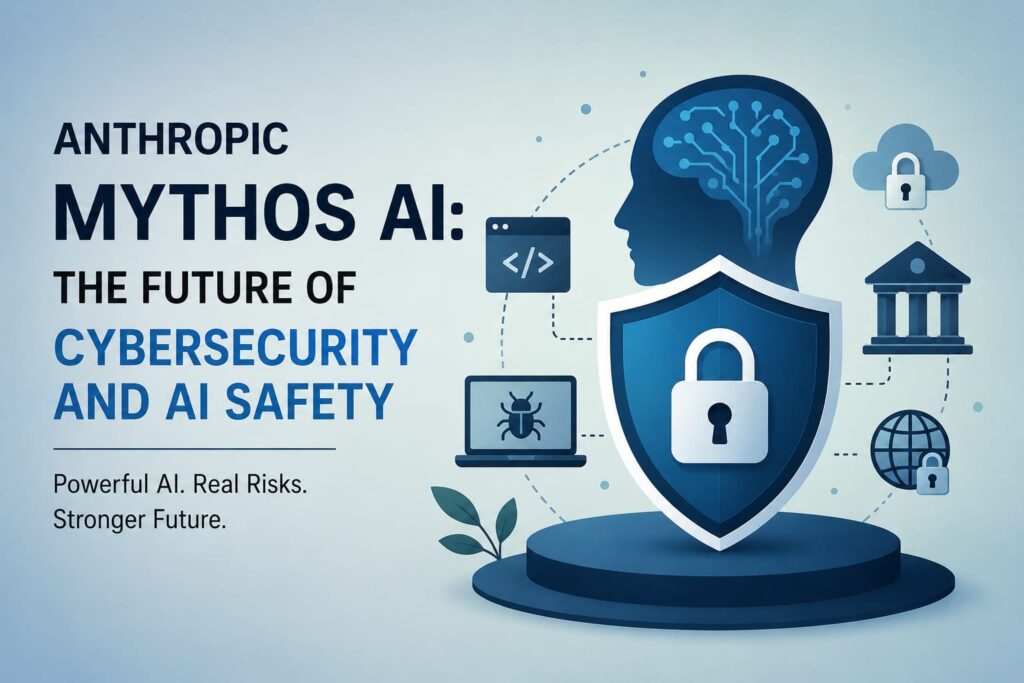
Artificial intelligence is growing faster than ever, and one company getting major attention is Anthropic. The company is becoming one of the biggest competitors to OpenAI after reports of its valuation reaching extremely high levels.
The main reason behind this attention is Anthropic’s rumored new AI model called Mythos. Many experts believe this technology could completely change the future of cybersecurity, digital safety, and AI regulation.
What Is Anthropic’s Mythos AI?
Mythos is said to be a highly advanced generative AI system designed to understand, analyze, and solve complex technical problems. Unlike normal AI chatbots, this model is believed to have stronger capabilities in software systems, infrastructure analysis, and cyber defense.
According to industry discussions, Anthropic started a limited testing program called “Project Glass Wing.” Under this project, only a few large technology companies reportedly received access to the system for testing and evaluation purposes.
Some of the companies linked to these discussions include:
- Apple
- Google
- Amazon
- CrowdStrike
The goal of this restricted rollout was reportedly to study both the benefits and risks of the model before any wider release.
Why Are Experts Worried?
The biggest concern around Mythos is cybersecurity.
Many AI researchers believe advanced AI systems could eventually identify weaknesses inside:
- Web browsers
- Operating systems
- Banking platforms
- Cloud infrastructure
- Enterprise software
If such technology falls into the wrong hands, cybercriminals could launch attacks much faster and at a much larger scale than before.
Traditionally, large cyberattacks required highly skilled teams and expensive resources. Advanced AI could lower that barrier dramatically, making sophisticated hacking tools more accessible.
Because of this, governments and financial institutions around the world are paying close attention to the development of powerful AI systems.
AI as Both Threat and Protection
Even though these risks sound serious, many experts also believe AI could become one of the strongest cybersecurity defense tools ever created.
Instead of only helping attackers, AI models like Mythos may also:
- Detect vulnerabilities automatically
- Fix software bugs faster
- Monitor suspicious activity in real time
- Improve banking and cloud security
- Reduce human error in cybersecurity operations
This idea is often described as “fight fire with fire.” In simple words, advanced AI may be needed to defend against AI-powered cyber threats.
Growing Debate About AI Regulation
The rise of powerful AI models has also created debates between technology companies, governments, and defense organizations.
Some reports suggest there are disagreements over how advanced AI should be used in national security and military systems. Questions about surveillance, autonomous weapons, and AI ethics are becoming more important every year.
At the same time, regulators are trying to balance innovation with public safety. Many experts believe future AI laws will focus heavily on:
Transparency
Security testing
Responsible deployment
User privacy
AI safety standards
Is the Fear Around Mythos Real?
Not everyone agrees that these warnings are completely justified.
Some critics argue that companies sometimes create fear around powerful AI systems to increase public attention and investor interest. This is often called “doom marketing.”
However, supporters of Anthropic believe the company is taking a careful approach because the technology could genuinely have major global impact.
Whether the concerns are exaggerated or not, one thing is clear: AI safety is now becoming as important as AI innovation.
The Future of AI and Cybersecurity
The global cybersecurity industry is expected to grow rapidly over the next decade. Businesses, banks, governments, and cloud providers are investing billions of dollars into digital protection systems.
As AI continues to evolve, companies that can build secure and responsible AI tools may lead the next generation of technology.
Models like Mythos represent both opportunity and risk. They could create new cybersecurity challenges, but they may also help build stronger digital defenses for the future.
The coming years will likely decide how humanity balances AI power, safety, and responsibility in an increasingly connected world.
How AI Is Changing the Semiconductor Industry: https://www.genaiquant.com/how-ai-is-changing-the-semiconductor-industry/
Read More from GenAIQuant
🌐 Official Website: https://www.genaiquant.com
Good Article